Monday, October 5, 2009

It's Only a Paper Moon, Addie Pray!

The Wednesday, September 9th edition of The Marion Times-Standard ran this image and caption of a gentleman from Surrey, England, who was visiting briefly in Marion and the area. Enthralled by the 1973 Hollywood movie, Paper Moon, directed by Peter Bogdanovich, and starring the father-daughter team of Ryan and Tatum O’Neil, Madeline Kahn, and Randy Quaid, this Englishman was traveling the country visiting sites depicted in the movie, including Marion!


From The Marion Times-Standard, Wednesday, September 9, 2009.

Now, like many of you, I saw Paper Moon (filmed in black and white) when it first came out and I loved it. But, the movie was set on the Great Plains of Kansas and western Missouri, not in Alabama!


DVD cover for Paper Moon, originally released by Paramount Pictures in 1973.

Turns out, the movie was adapted from the novel Addie Pray by Joe David Brown of Birmingham, Alabama. The novel is initially set in Alabama, but expands – via the main character’s travels – into Tennessee, Mississippi, Arkansas, Oklahoma, Texas, and Louisiana. Alabama towns reportedly mentioned in this area include Selma, Hamburg, Marion, Brent, and Centreville. Supposedly, a scam scene at a Marion bank is included.

Addie Pray was first published in 1971, was adapted for the movie Paper Moon in 1973, and was reprinted in 2002 as Paper Moon: A Novel.
Narrated by 11 year-old con-artist Addie Pray, an orphan, who travels with scam/confidence man “Long Boy” Moses (he is one of three possible fathers of Addie), the pair strike out across the Deep South during the Depression-era 1930s trying their “luck” in every town, nook and cranny.


”Long Boy” Moses and Addie Pray (Ryan and Tatum O’Neil). (Credit: Paramount Pictures)

Tatum O’Neil (actually, only 9 years-old when she played the part of Addie Pray) won the Oscar for Best Supporting Actress in 1974, and she remains the youngest person ever to win a competitive Academy Award. Her father, veteran actor Ryan O’Neil, played the part of “Long Boy” Moses. Miss Trixie Delight was played by Madeline Kahn, and Randy Quaid played Leroy.
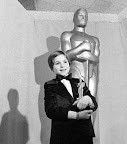

Ten years-old in 1974, Tatum O’Neil remains the youngest person to win a competitive Academy Award. (Credit: Wikipedia)


Madeline Kahn as Miss Trixie Delight. (Credit: Paramount Pictures)

The author, Joe David Brown, who died in 1976, was born in Birmingam, Alabama. He worked initially for The Birmingam Post, later the New York Daily News, and finally for Time and Life magazines, being stationed in New Delhi, Paris, London, and Moscow. Two of his other books, Stars in My Crown (1947) and Kings Go Forth (1956), were also made into movies.

During World War II, Brown served in the Army Air Corps, and as a member of the 517th Parachute Regimental Combat Team, was one of the first Americans to parachute into Normandy, France, on D-Day, June 6, 1944. He received a battlefield commission to second lieutenant, and was awarded the Bronze Star, Purple Heart, and the French Croix de Guerre with palm.


Author Joe David Brown in uniform. (Credit: 517th Parachute Regimental Combat Team website)

So, the next time we watch Paper Moon, a classic movie, we’ll know the story behind the story. And, like the song says, “It’s Only a Paper Moon.”

Friday, September 25, 2009

Supporting 1LT Dan Berschinski, MMI 2003

In August, 2009, 1LT Dan Berschinski, an AOG (West Point’s Association of Graduates) scholar at MMI from 2002-2003, was seriously wounded in Afghanistan by an improvised explosive device while his men were securing a village. Dan lost both of his legs, and his left arm was shattered. A member of the 5th Brigade, 2nd Infantry Division, 1st Battalion, 17th Regiment, Dan is convalescing at Walter Reed Army Medical Center in Washington, D.C.


Army 1LT Dan Berschinski in Afghanistan. (Credit: Dan Berschinski’s website)

A native of Peachtree City, Georgia, where he graduated from McIntosh High School in 2002, Dan spent a year at MMI preparing for the United States Military Academy at West Point, New York. He graduated in the Class of 2007.


Dan as an AOG scholar here at MMI. (Credit: 2003 Orange and Black, MMI’s yearbook, MMI Archives)

Two more images from the 2003 yearbook:


Friends in Peachtree City and Fayette County, Georgia, have set up a website to support Dan. Please access from http://danberschinski.blogspot.com.

This blog indicates that Dan Berschinski’s brigade has been taking horrific casualties outside of Kandahar, Afghanistan, and that a number of these men are with Dan at Walter Reed, some even more seriously wounded than Dan. The blog also mentions another Peachtree City resident, SGT Shawn P. McCloskey, a Green Beret in the Special Forces, who was killed in September.

Undaunted, the blog states that Dan is upbeat and positive, that he has charmed his nurses, and that he greets visitors to his hospital room with a friendly, “Hey, what’s up?”

My thanks to LTC David Bauer for bringing Dan's story/plight to my attention.

Wednesday, September 23, 2009

Nicola Marschall and the First Confederate Flag

Nicola Marschall (1829-1917) of Marion, Alabama, a German-American artist, is generally credited with designing both the first official Confederate flag and the grey Confederate army uniform.


An 1867 self-portrait of Nicola Marschall. (Credit: Alabama Department of Archives and History)

Born into a wealthy Prussian family of tobacco merchants in 1829, Nicola Marschall, a budding artist, decided to mark his mark in the United States. In 1849, he emigrated to America landing first in New Orleans, Louisiana, and then moving on to Mobile, Alabama. Nicola Marshall relocated to Marion, Alabama, in 1851, where he opened a portrait studio and also taught art. Joining the faculty and staff of Marion Female Seminary, Marshall – a man of many talents - taught art (he studied at the celebrated Dusseldorf Academy), languages, and also instructed and performed on guitar, violin, piano, and harp.


Marion Female Seminary, Marion, Alabama. (Credit: Alabama Department of Archives and History)

With the coming Civil War in 1861, Nicola Marschall was approached in February by Mary Clay Lockett, wife of prominent attorney Napoleon Lockett of Marion, and her daughter, Fannie Lockett Moore, daughter-in-law of Alabama Governor Andrew B. Moore of Marion, to design a flag for the new Confederacy. Marschall offered three designs, one of which became the “Stars and Bars,” the first official flag of the Confederate States of America (C.S.A.), and which was first raised in Montgomery, Alabama, on March 4, 1861. He also is credited with designing the first “official” Confederate uniform.


Pattern of the seven-star “Stars and Bars” flag designed by Nicola Marshall in 1861.


Nicola Marschall monument on the grounds of the Perry County Courthouse, Marion, Alabama. (Credit: Deep Fried Kudzu)

Shivers McCollum, MMI H’45, JC’46, of Highland, Maryland, and a member of the MMI Board of Advisors, sent me a copy of a letter written by his great-great grandmother, Juila Anne Cocke, wife of State Senator Jack Fleming Cocke (a trustee of Howard College when our Chapel was built in 1857), regarding the making of the first Confederate flag in Marion. The original letter is preserved in the Alabama Department of Archives and History in Montgomery. Here is a photocopy and the transcription, both provided by Shivers:


Photocopy of the original letter in the Alabama Department of Archives and History in Montgomery (Page one).


Page two.


Transcription of the letter. (Credit: Shivers McCollum, Highland, MD)

Nicola Marschall served in the Confederate army during the war, rising in rank from private to second lieutenant, and working primarily has chief draftsman of maps and fortifications in the Mobile, Alabama, area. When the war ended in 1865, he returned to Marion and married Martha Eliza Marschall (1846-1919) of Perry County. She bore him three children. Nicola Marschall painted portraits of both he and his wife which now reside in the First White House of the Confederacy in Montgomery, Alabama.

Primarily a portrait artist, Marschall painted literally hundreds of subjects including Jefferson Davis, Abraham Lincoln, Napoleon, and Otto von Bismarck. He even got famed Confederate cavalry commander, General Nathan Bedford Forrest, to sit still long enough to have his portrait painted in 1867. Nicola Marschall was awarded a medal for his portraits at the Centennial International Exposition in Philadelphia, PA, in 1876.


Portrait of General Forrest painted by Nicola Marschall in 1867. (Credit: General Nathan Bedford Forrest Chapter, United Daughters of the Confederacy)

Disillusioned with the economic devastation in the Reconstruction South, Nicola Marshall and his family moved to Louisville, Kentucky, in 1873, where he continued to support his family as a portrait artist until his death on February 24, 1917. Nicola Marshall was buried in Cave Hill Cemetery in Louisville.


Another self-portrait of Nicola Marschall in 1893. (Credit: Alabama Department of Archives and History)

Tuesday, September 15, 2009

John Pelham Update/Colin Kelly, Jr.

The blog about the “Gallant” Major John Pelham generated a buzz, so here are three more related images – the state historical marker pointing to the site of Pelham’s birthplace near Alexandria, Alabama (the house is now gone, but there is a small marker); the Virginia state marker at Fredericksburg, scene of Pelham’s finest hour; and the marker at the site of his mortal wounding at Kelly’s Ford, Virginia. Major Pelham died in a house in nearby Culpeper, VA (this house is also gone, but there is a small marker). John Pelham’s promotion to LTC came through after his death.


Alabama state marker to John Pelham’s birthplace. (Credit: John Pelham Historical Association)


Virginia state marker near Fredericksburg, scene of Major Pelham’s finest hour. (Credit: John Pelham Historical Association)


Marker at the site of Pelham’s mortal wounding at Kelly’s Ford, VA. (Credit: John Pelham Historical Association)

Some more John Pelham tidbits:
-When Pelham died, his body lay in state in the Confederate capitol building in Richmond, VA. At least three young women went into mourning for him.

-Jeb Stuart and his wife named their daughter Virginia Pelham Stuart.

-Famed Confederate spy, Belle Boyd, gave Pelham a Bible with the inscription: “I know thou art loved by another; I know thy wilt never be mine.”

-The “other” was Sally Dandridge of “The Bower” in West Virginia, Jeb Stuart’s sometime headquarters and scene of festive parties featuring the music of banjoist Sam Sweeney. Heroes von Brocke, of Stuart’s staff, a former Prussian officer and soldier-of-fortune, added to the overall splendor and gaiety of the parties.

-Like John Pelham, neither Jeb Stuart nor Sam Sweeney survived the war. Von Brocke was seriously wounded and, after the war, returned to his castle in Prussia where he flew the Confederate flag from the ramparts until his death.

-Several Southern towns are named for Pelham, including Pelham, Alabama. There is a John Pelham Memorial Parkway in Georgia, a Lake Pelham in Virginia, and, of course, Pelham Range at Fort McClellan, Alabama, reportedly built on Pelham Family property along Cane Creek.

Finally, here is an advertisement (given to me by Myra Jean Hopkins) for a VHS/DVD regarding the truth and myth of America’s first hero of World War II, Colin Kelly, Jr., MMI’33, USMA ’37, who was also the first West Pointer killed in the war. For those interested, the order information is included. However, this is all I have, so order at your own risk!


Ad for the Colin Kelly, Jr., VHS/DVD. (Credit: Myra Jean Hopkins and the MMI Archives)

Tuesday, September 8, 2009

Arthur Stewart, MMI JC '35, World-Renowned Artist, Part Two

When I posted the blog on Arthur Stewart, MMI JC ’35, I realized that I needed more images both of the artist and his work.

Rusty (Lewis M., Jr.) Stewart, MMI ’61, of Birmingham, Alabama, sent these two images of his famous uncle:


Joel R. Hillhouse, MMI H ’59, also from Birmingham, of the MMI Board of Advisors, contributed these color snapshots of his wonderful collection of Arthur Stewart paintings:


Monday, August 31, 2009

Arthur Stewart, MMI JC '35, World-Renowned Artist

With the recent death of COL Lewis Stewart, MMI Class of 1939, we were reminded that he was the brother of the late Arthur Walter Stewart, Jr., MMI JC Class of 1935, a world-renowned portrait and landscape artist from Birmingham.

From a large family of brothers and sisters - the children of Arthur and Jean Stewart - Arthur Walter Stewart, Jr., was born in Marion and received his A.A. degree from Marion Military Institute in 1935. He continued his education at Auburn University and at the Art Institute of Chicago, where he presented his first one-man show at the age of 23. Stewart had begun painting when he was six years old.


The MMI Corps of Cadets when Arthur Stewart (“A” Company) was a cadet. (Credit: 1934-1935 MMI Catalogue, MMI Archives)

Following a four and a half year stint in the Army during World War II, where he served as a painter in the ordnance department, Arthur Stewart traveled extensively in Mexico and Europe for several years, painting as he went. He finally settled in San Francisco in 1947, although he made annual trips to Alabama to paint portraits. In 1952, Stewart moved to Birmingham, Alabama, permanently.

Arthur Stewart taught at the Birmingham Museum of Art School, served as president of the Alabama Watercolor Society, and was inducted into the Portrait Painters Hall of Fame in 1985. During his career, he won over 30 national awards, and presented over 35 one-man shows from New York to California. Along the way, he painted literally thousands of works – oil portraits, watercolor flowers, and scenic landscapes – which today hang in more than 1,000 public and private collections worldwide.

When Arthur Stewart first moved to Birmingham, he lived in a small house on the property of the grandparents of Joel R. Hillhouse, MMI Board of Advisors member. Joel’s parents first lived on the property after their marriage, and Arthur Stewart taught Joel’s mother art and even painted her portrait. Joel Hillhouse, MMI H Class of 1959, who owns a number of Stewart paintings, has one particular favorite, “The Studio” (below), which depicts that small house.


"The Studio" by Arthur Stewart. (Credit: Collection of Joel R. Hillhouse)

Stewart later purchased the 40-acre “Glocca Morra Farm” (named after a song in Finian’s Rainbow) in Cahaba Heights near Birmingham. There he lived the rest of his life, while continuing to produce works both in the United States and Europe. When his health failed, he was cared for by his sister, Hannah Stewart. Arthur Stewart painted up until his last days, dying on September 6, 2001, at the age of 86.

Arthur Stewart’s works can be found in collections ranging from Britain’s Queen Elizabeth, II, the La Scala Opera House in Milan, Italy, the Pentagon in Washington, D.C., the Lyndon Bains Johnson Library in Texas, and the Birmingham (AL) Museum of Art. Reportedly, his works sell from $400 to $35,000 each.

On September 1, 1993, Arthur Stewart’s portrait of William R. Ireland was unveiled at the William R. Ireland Athletic Center at Marion Military Institute (dedicated April 3, 1993). In the image below – from the 1994 MMI Orange and Black yearbook – the group flanking the painting include from left to right: MG Joseph Fant, MMI president, Arthur Stewart, the artist, Mr. and Mrs. William R. Ireland, and Alva Caine, Chairman of the MMI Board of Trustees.


At the unveiling of Arthur Stewart’s painting of William R. Ireland at MMI’s Ireland Center on September 1, 1993. (Credit: 1994 MMI yearbook, MMI Archives)

Credit: I am indebted to Joel Hillhouse and James Murray of Birmingham for providing the bulk of this material. We know Joel, of course. He also provided the color image posted here from his collection of Arthur Stewart paintings. Jim Murray is head of Social Sciences at the Birmingham Public Library.

Wednesday, August 26, 2009

Wearing of the Gray: The Gallant Pelham

I’ve spent this summer adding some 1500 books in the General Collection of the MMI Archives to the MMI Archives Inventory. Among the numerous gems in this collection, one book that caught my personal interest is an 1867 (just two years after the Civil War) edition of John Esten Cooke’s Wearing of the Gray, one of the classic contemporary accounts of Confederate military history, and specifically centering on famed cavalry commander, General “Jeb” Stuart, a relative of John Esten Cooke. Through Stuart, Cooke, a writer more than a soldier, gained access to the top Confederate leadership in the Army of Northern Virginia, from General Robert E. Lee on down.

A lifelong Civil War buff, one of my favorite personalities is Major John Pelham, C.S.A. – “The Gallant Pelham” (1838-1863) from Alexandria, Alabama. Pelham, commander of the Stuart Horse Artillery, revolutionized the use of light artillery as a mobile arm of the cavalry. He was inducted into the Alabama Hall of Fame in 1955, and was among the first inductees into the Alabama Military Hall of Honor here at MMI in 1976.


John Pelham in his West Point furlough coat. Pelham left the Academy in 1861, just before graduating, to offer his services to Alabama and the Confederacy. (Credit: Valentine Museum, Richmond, VA, and the National Park Service)

The youthful Pelham was the darling of Stuart’s cavalry and a personal favorite of John Esten Cooke. The women loved him, the men admired him, and he displayed all the combat skills of a genuine battlefield hero. John Pelham fought in over 60 battles and skirmishes from 1861 to 1863 – never receiving a scratch – until that fatal day (St. Patrick’s Day, March 17, 1863) when a shell exploded in a cornfield at Kelly’s Ford, Virginia, mortally wounding him. He was 24 years-old when he died.


The title page of the 1867 edition of Wearing of the Gray includes the faded image of General “Jeb” Stuart from the facing page. (Credit: MMI Archives)


This illustration on page 17 of the book places Major John Pelham in rather high company! (Credit: MMI Archives)

One of my Virginia Civil War friends always refers to John Pelham as the “Robert Redford of the South!” In short, he had it all.

Here are a couple of quotes about Pelham:

Stonewall Jackson at Antietam: “With a Pelham on each flank, I believe I could whip the world!”

Robert E. Lee at Fredericksburg: “It is glorious to see such courage in one so young.” Lee called him “the gallant Pelham” in his official report.

Our edition of the Wearing of the Gray includes an illustration of Major Pelham receiving his mortal wound that I have never seen before – or, at least, it is not now attributed to John Pelham. I checked the images of Pelham on Google and Yahoo, plus the site of the John Pelham Historical Association. No one seems to have this image, so, I hope this is a revelation, something that got misplaced/omitted over the years in successive editions of the book.


The illustration of Major Pelham receiving his mortal wound at Kelly’s Ford, VA, March 17, 1863. (Credit: MMI Archives)

The “Gallant” John Pelham is buried in the City Cemetery in Jacksonville, Alabama, in his home county of Calhoun County.


John Pelham’s grave and monument in Jacksonville, Alabama. (Credit: Findagrave.com)