Monday, April 7, 2008

More images!

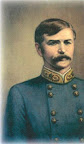
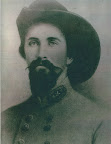
Confederate General John Hunt Morgan (1825-1864), for whom the Morgan’s Raiders at MMI were named.


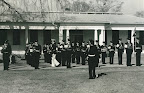
Band Company, c. 1950s or 1960s.


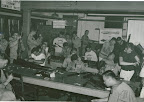
Cleaning rifles in the Armory, c. 1950s or 1960s.


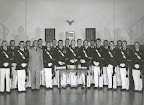
Cadet Officers, c. 1950s or 1960s.


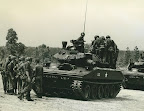
Advanced Army ROTC Summer Camp, 1970.


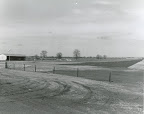
The airport in Perry County where MMI cadets learned to fly, c. 1960s or 1970s.


“Study to show thyself approved” (2 Timothy 2.15), c. 1960s or 1970s. (Thanks COL Stan Bamberg!)


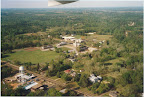
Aerial view of the MMI campus, c. 1990s.


Cadets attending the annual Art Show in the Big Room of the MMI Library.


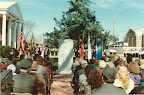
Dedication of the MMI Alumni Vietnam Memorial in front of the Alabama Military Hall of Honor, 10 November 1989.

Monday, March 31, 2008

Captain Richard Pratt and Six Mile Academy: Feeder School to Howard College and MMI

MMI’s predecessor, Howard College (founded 1842), was an institution of the Alabama Baptist Convention which, like Marion Female Seminary and Judson College, was founded by members of the Siloam Baptist Church here in Marion. Howard and MMI received some of their better students (both in Marion and later in Birmingham) – particularly ministerial students - from a feeder Baptist institution, Six Mile Academy, a member of the Mulberry Baptist Association.


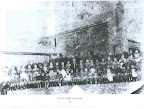
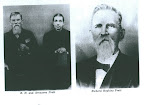
Incorporated in 1859 but organized earlier, Six Mile Academy was located on Six Mile Creek (Bibb County) between Centreville and Montevallo on Highway 25 not far from Brierfield Ironworks State Historical Park. A coed elementary and secondary school, Six Mile’s heyday came via Captain Richard Hopkins Pratt, who served as headmaster from 1858-1861 and, following the Civil War, from 1872-1896. Six Mile Academy burned in 1897. This faint image shows Captain Pratt in the center of his students.


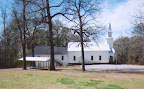
Captain Pratt and his wife, Arvezena, staunch members of the Six Mile Baptist Church, transformed the academy into one of the finest schools in the region and Howard College and MMI reaped the benefits of their instruction by admitting their excellent graduates.


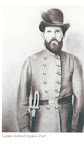
During the Civil War, Richard Pratt organized Company D, 20th Alabama Infantry, serving as its captain. This regiment was formed by COL Isham Garrott of Marion, who was killed at Vicksburg (he was later promoted to brigadier general). Captain Pratt, himself, was taken prisoner at Fort Gibson near Vicksburg on May 1, 1863, imprisoned and later paroled.


Captain Pratt was elected Superintendent of Education of Bibb County, Alabama, in 1896, serving until his death on September 17, 1908.

Other buildings replaced the original academy facility becoming first Six Mile Normal Institute and later a public school until 1981. Nothing remains on the site today which has become Six Mile Community Park.


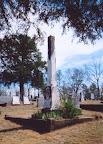
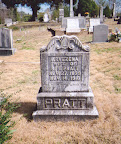
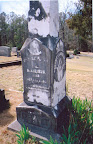
Captain Pratt and his wife, Arvezena, are buried beside each other in the cemetery of the Six Mile Baptist Church. The Captain’s grave, a tall marble shaft with his Masonic emblem, bears the following inscription: “We loved him, yes, we loved him, but the Angels loved him more.”


Monday, March 10, 2008

Financial Crisis at MMI (1911)

The purpose of this MMI Archives blog is to illustrate that financial woes have been part and parcel of the history of the Institute beginning with Howard College in 1842. Educational institutions - particularly private ones without major church support and/or a strong endowment – are usually hard-pressed to find and maintain a continual flow of funding to support the school and its programs. Many schools are enrollment-driven. A strong endowment is crucial to the survival of an institution.

As someone who taught at a venerable old military school in Virginia which closed its doors, I can tell you that it was not a pretty sight. Augusta Military Academy (1865-1984) had an illustrious history, distinguished alumni, and an enviable record of service to Virginia and the nation. In the end, the Corps was down to about 80 cadets (beds for 600) and the cadets returned from Christmas furlough only to find that their school had closed.

The leadership of MMI has constantly struggled to keep the doors open and to provide a quality educational program.

An example of this struggle is highlighted in the following letters from the Hopson Owen Murfee Papers housed in the MMI Archives. Murfee, son of our founder, served as the second president of MMI. It was he who wanted to transform the Institute into his “Eton of the South” concept modeling the school after one of the great English public schools. This dream lasted until the outbreak of World War I when the military program was again emphasized at MMI and the ROTC programs were established.

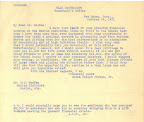
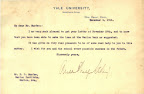
These letters from 1911 – two from Anson Phelps Stokes, Jr., Secretary of Yale University (second only to Yale’s president) and H. O. Murfee’s eventual reply - show that MMI needed $12,000 immediately to keep its doors open – a hefty sum in 1911. That H. O. Murfee felt the need to contact Stokes regarding this crisis (Stokes had visited MMI the year before) underscores the seriousness of the problem. It also illustrates the fine list of associates which Murfee had amassed over the years to support MMI and its programs. Murfee found that going First Class, to borrow the English phrase, costs money and lots of it, and he was compelled to call upon his friends to support the Institute.


The crisis of 1911 was averted, but it was just one instance in a long string of challenges faced by the MMI leadership. H. O. Murfee’s heartfelt letter to The Rev. Stokes at Yale typifies the strong Christian faith and moral values of MMI and its leadership.

Tuesday, March 4, 2008

Marion’s Two Confederate Generals (One, Superintendent of The Citadel)

The town of Marion boasted at least two general officers who fought for the Confederacy during the Civil War: Brigadier Generals George D. Johnston and Isham W. Garrott. Johnston later became Superintendent of The Citadel.

A North Carolinian who graduated from Howard College here in Marion, George D. Johnston (1832-1910) received his law degree from Cumberland University in Tennessee, and practiced law here in Marion. In 1856 he served as Mayor of Marion before going to the State Legislature from 1857-1858.


With the outbreak of the Civil War in 1861, Johnston enlisted as a second lieutenant, 4th Alabama Infantry, eventually rising to the rank of Brigadier General in the Army of the Tennessee. BG Johnston fought in every battle from Shiloh to Bentonville.

After the war, Johnston served as Commandant of the University of Alabama Cadet Corps, a position held previously by COL James T. Murfee, founder and first president of Marion Military Institute. From 1885 to 1890, Johnston served as Superintendent of The Citadel in Charleston, South Carolina. Following service as the U. S. Civil Service Commissioner, Johnston returned to Tuscaloosa, Alabama, where he was elected to the State Senate. BG George D. Johnston died in 1910.

The Greek Revival home of BG Johnston here in Marion, Myrtle Hill, was built in 1840 and now serves as a Bed and Breakfast. LTC Gerry and Wanda Lewis are the present owners.


Another North Carolinian who graduated from the University of North Carolina at Chapel Hill in 1840, Isham Warren Garrott (1816-1863) practiced law here Marion. Active in the community, Garrott was member of the Whig political party, a Mason, a member of the Siloam Baptist Church, an incorporator of the Marion and Alabama River Transportation Company, and President of the Board of Trustees of Howard College here in Marion. He was elected to the Alabama House of Representatives in 1845 and 1847.


With the outbreak of war in 1861, Isham Garrott formed the 20th Alabama Infantry Regiment, serving as its Colonel. After his brigade commander was killed at Port Gibson, Mississippi, Garrott took command of Tracy’s Brigade in the defense of Vicksburg. COL Garrott was killed by a Union sharpshooter on June 17, 1863, shortly before being promoted to Brigadier General. Fort Garrott near Vicksburg was named for him. The fort never fell to the enemy. Hastily buried in Vicksburg during the siege, his remains have been lost.

A stone marker for Garrott stands in Soldiers Rest Confederate Cemetery, located in the Cedar Hill (Old Vicksburg City) Cemetery.


BG Garrott’s home in Marion later burned to the ground. The smokehouse with office was saved and was later moved to the Roy Johnson property next to MMI.
The building is now the property of Anita Johnson who has used it as a Bed and Breakfast. It currently serves as my humble abode.

Monday, February 25, 2008

A Grand Lady and Some Famous Men

On Saturday, March 1st, the Marion Public Library will launch the “Big Read,” a month-long study of the Pulitzer Prize-winning novel To Kill a Mockingbird (1960) by Harper Lee of Monroeville, Alabama. The Big Read Kickoff will be at 5 PM at the Perry County Courthouse in Marion.


Considered an American literary classic, To Kill a Mockingbird is Harper Lee’s only book. Of course, she and Truman Capote grew up together in Monroeville and remained friends and cooperative writers for life. Her book was awarded the Pulitzer Prize for Fiction in 1961. It has been translated into some forty languages and has sold well over 30 million copies to date worldwide. Nelle (as her friends and family call her) Harper Lee was presented the Presidential Medal of Freedom in 2007 for her contributions to literature. Finally, librarians across the country have named To Kill a Mockingbird the best novel of the twentieth century!

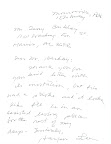
Here is a hand-written letter from Ms. Lee declining an invitation to attend our “Big Read” due to her present health situation.


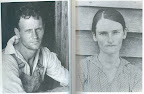
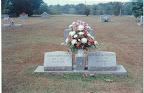
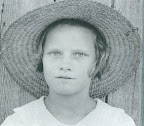
In 1936, writer James Agee and photographer Walker Evans, both working for the Farm Security Administration (FSA), visited Hale County, Alabama, where they zeroed in on three poor white sharecropper families as subjects for a magazine article. They recorded their daily lives and struggle for survival in the aftermath of the Great Depression and the onslaught of the New Deal era. The resulting book with accompanying photographs, Let Us Now Praise Famous Men (1941), eventually established the reputations of Agee and Evans, but did nothing to improve the plight of the three Alabama families. Three of Walker Evans’ most famous photographs from the book included three members of the Gudger family, George and Annie Mae and their ten year-old daughter, Maggie Louise. Changed for the book to protect their actual identities, their names were really Floyd, Allie Mae, and Lucile Burroughs.


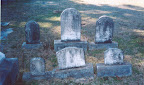
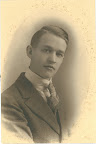
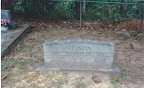
Here are Walker Evans’ images of the Burroughs and here are their graves today in Oak Hill Cemetery in Moundville, Alabama. Later in life, Lucile, who always wanted to be a teacher or a nurse, killed herself by drinking rat poison. (Credit: Walker Evans from Let Us Now Praise Famous Men by James Agee and Walker Evans. Boston: Houghton Mifflin Co., 1941; modern images by Terry Barkley.)


The three sharecropper families lived up this dirt road on Hobe’s Hill (actually Mills Hill) between Moundville and Havana.



Let Us Now Praise Famous Men has also become something of an American classic and is taught in colleges and universities nationwide. When I was a graduate student at Harvard University, I learned that the book was required reading for freshmen students in Harvard College.

This book has also done much to stereotype Alabama and her people in the eyes of the rest of the nation and the world, and it has been roundly criticized and/or praised ever since its publication in 1941.

Fifty years after the publication of Let Us Now Praise Famous Men, the writer/photographer team of Dale Maharidge and Michael Williamson returned to Hale County to document the remaining original members and their descendents from the three sharecropper families. They discovered that little had changed for the families despite the fame of Famous Men. Their ground-breaking book, And Their Children After Them, a masterpiece of research, writing and photography, was awarded the Pulitzer Prize for nonfiction in 1990.


By the way, the sites of the three sharecropper farms are just north of the village of Havana in Hale County, while the site of Henry and Julia Tutwiler’s Green Springs School is just southwest of Havana.
Thursday, February 21, 2008

Some Interesting Images

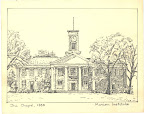
An old postcard drawing of the MMI Chapel.


An excellent view of the MMI Chapel from the 1960s or 1970s.


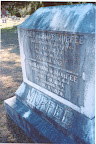
The graves of James Thomas Murfee (1833-1912), founder and first president of MMI, and his wife, Laura Owen (1841-1920), in the Marion city cemetery.


To the right of the Murfee marker are three smaller graves of their children who died early. (I believe there are three graves and not six!)


The back of the Murfee marker: The Bible verse reads “There remaineth therefore a rest to the people of God.” Hebrews 4.9 (thanks COL Stanley Bamberg!).


An announcement for a Concert Band and Cadet Chorus concert in the MMI Chapel on December 14, 1967: “A Feast of Carols.”


An unidentified but dapper young cadet, circa 1920.


The official invitation to the Inauguration of George Bush and Dan Quayle on January 20, 1989, in Washington, D. C.

Wednesday, February 13, 2008

Of Soldiers and Scholars: Lieutenant General Edward M. Almond and Dr. Thomas P. Abernethy

In addition to our distinguished graduates and former cadets, a good number of MMI faculty and staff have made their marks in a variety of endeavors. Two are highlighted here, contemporaries on the MMI faculty/staff in the 1920s.

A Virginian and a graduate of the Virginia Military Institute, Class of 1915, Edward Mallory Almond (1892-1979) taught at MMI before World War I and returned thereafter as Professor of Military Science and Tactics from 1919-1923. A troop commander in World War I, he had been wounded in the Aisne-Marne offensive. During World War II he commanded the 92nd Infantry Division in Italy. Assigned to General Douglas MacArthur’s Tokyo staff in 1946, he was selected as his Chief of Staff in 1949. General Almond led the successful Inchon invasion of Korea in 1950, and commanded the famed X Corps throughout the Korean conflict. He later served as commandant of the Army War College, rising to the rank of lieutenant general. His military decorations from three wars included the Distinguished Service Cross, Distinguished Service Medal, Silver Star, Legion of Merit, Bronze Star Medal with “V,” and the Purple Heart.


Both his son and son-in-law were killed in World War II. General Almond died in 1979 and was buried in Arlington National Cemetery.

The General met his wife while on duty at Marion Military Institute: the former Margaret Crook of Anniston, Alabama, then a student at Judson College.


A personal note: My father served with General Almond in the X Corps in Korea. I was born in Tokyo, Japan, in 1950, while my family were stationed there and my Dad was in Korea. I had the honor of meeting General Almond in 1971 in his office in Anniston, Alabama, (in retirement, he served as spokesperson for an insurance company) where he and his wife had retired to be near her family.

Born in Collirene, Alabama, Thomas Perkins Abernethy (1890-1975) was a member of the Marion Military Institute Class of 1908 (he was a cadet sergeant and played on the football team), and a 1912 graduate of the College of Charleston in South Carolina. He also taught at MMI for a number of years (1912-1914, 1919-1921) while completing his graduate work (M.A., 1915; Ph.D., 1922) in history at Harvard University in Massachusetts.
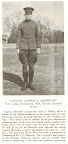


Dr. Abernethy married Ida Robertson, the secretary to the president of Marion Military Institute, in 1917.

Upon completion of his graduate studies at Harvard, Dr. Abernethy embarked upon a distinguished career as a Southern historian and professor which culminated in his serving as chair of the Corcoran Department of History at the University of Virginia, Charlottesville, one of the premier departments of history in the country. He retired from UVA in 1961.

The Abernethy Collection, the select private library of Dr. Thomas Perkins Abernethy, was donated by Abernethy to Marion Military Institute, circa 1970. The collection consists of some 950 volumes including many first editions and rare books, the oldest being published in 1779. Seven books written by Dr. Abernethy are also part of the collection.


Here is Dr. Abernethy talking with Ms. Woody.